
My angling skills are probably on par with most of my industry colleagues, so Capt. Brian “Bro” Brosdahl had no lack of confidence in my ability to follow rigging instructions or make accurate presentations.
But it wasn’t a lack of ability that concerned the Minnesota guide; it was our relatively short time.
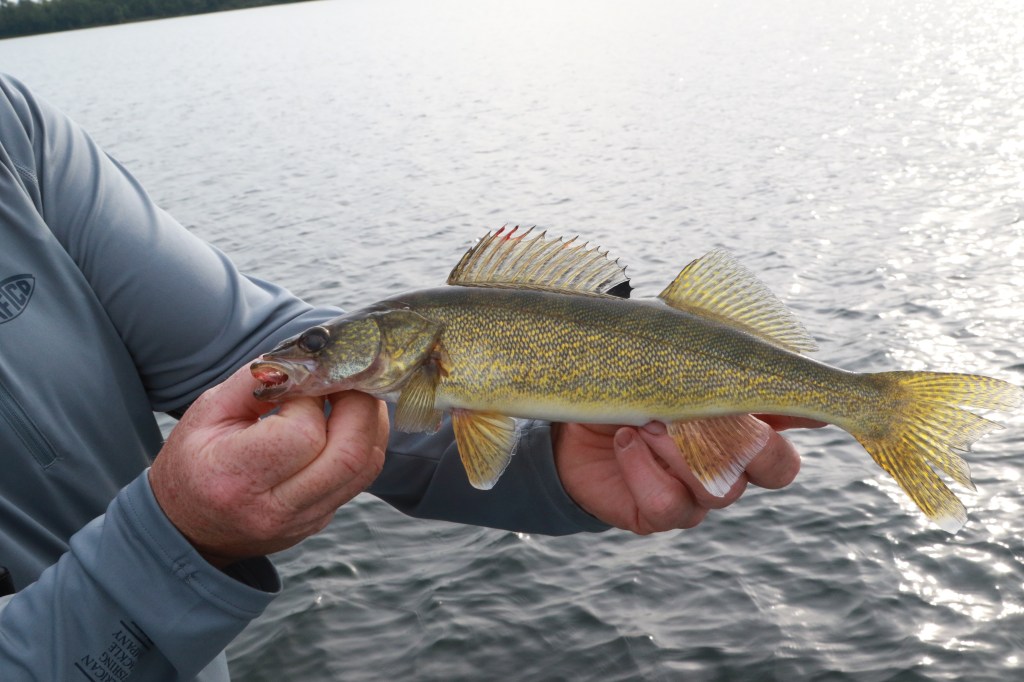
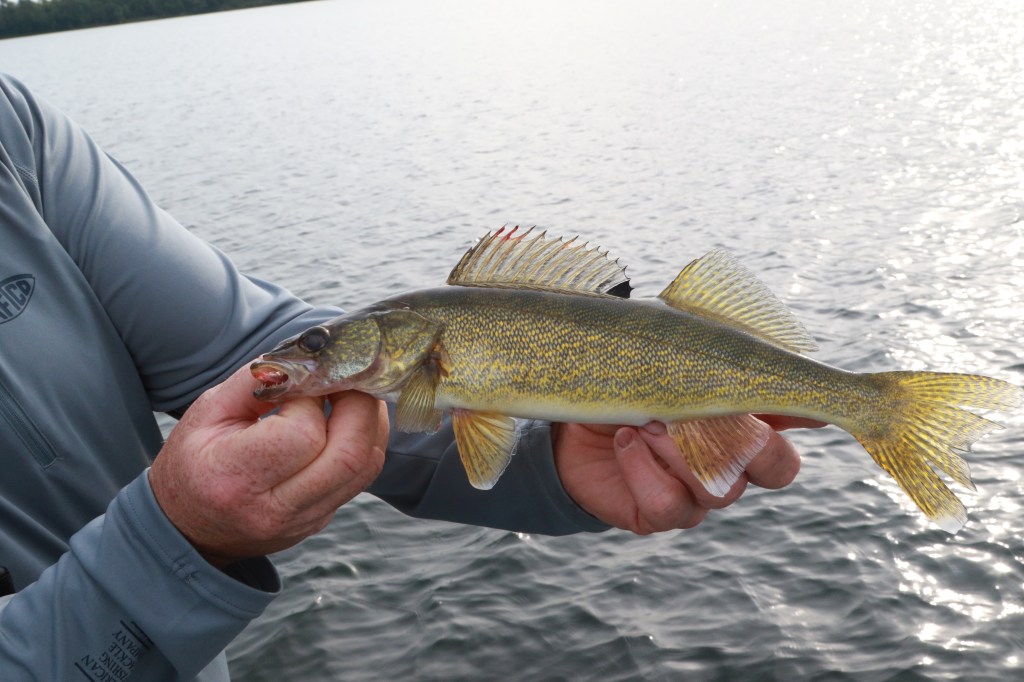
During a recent trip to Northern Minnesota, I joined the seasoned guide for a half-day outing and, despite my limited walleye experience, I managed to to put several quality fish up to 24 inches in the boat. Sure, I held the rod and turned the handle, but I have to credit my longtime friend’s prudent game plan for the memorable moments.
With more than 30 years on the job, Brosdahl has plenty of tricks and tactics from which to chose, but he knew that our best shot at tempting photo-worthy walleye was the vertical jig technique. Simple to execute, yet highly effective at tempting the toothy ones, jigs literally give square 1 beginners a legitimate shot at bagging big walleye.
“Jigging is the most user-friendly technique,” Brosdahl said. “Long rigs and crankbaits are all effective, but anyone can work a jig.”
Easy to cast with consistent accuracy, the straightforward design of a hook with a colorful lead or tungsten head requires no experience or special skills. Sure, practice improves any pursuit, but beginners and veteran anglers find the same truth — when you drop a jig in the water, it goes where it’s supposed to go.
Find the Fish
During our trip, Brosdahl focused on the outer zone of a weedy flat in 23 feet. This, he said, exemplified a simple location principle that’ll put you in the walleye neighborhood.
“Weed edges are always a good starting point, because walleye will hang (in this zone) and wait for crayfish and baitfish to come off the edges so they can grab them,” Brosdahl said. “I use my Humminbird MEGA Live to find fish, but even a basic depth finder will show you the weeds and where they drop off next to deep water.
“In clear water, look for weed tops then move out until you see (the vegetation) drop off. You can pitch your jigs along the edges or slow troll along the weed lines.”
In the fall, Brosdahl knows a lot of weeds will start to die back with cooling weather, so he looks for healthy green edges that remain intact. The ones facing the main lake typically offer the most potential and if he can find this scenario with current from a nearby creek or river channel, that’s money.
Target depth varies lake to lake, but don’t hesitate to check a range of options, shallow to deep. Local bait and tackle shops and online reports can help dial in your efforts, but as Brosdahl points out, nature provides clues.
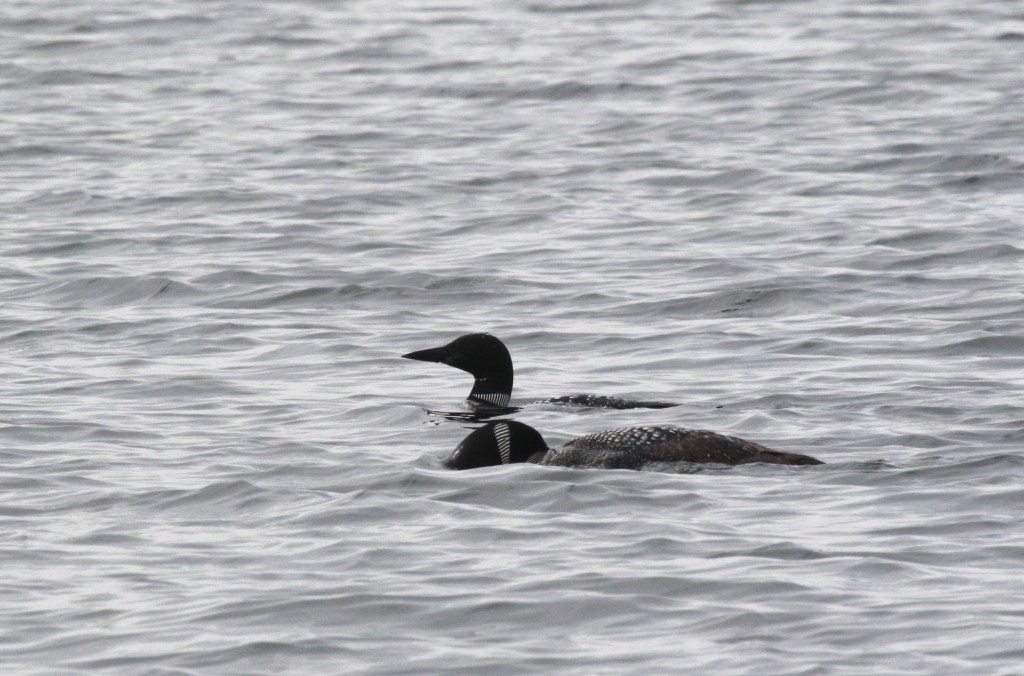
Keep watch for loons, those sleek, dark birds with long black bills and distinctive red eyes. Sitting low in the water, these divers find bait schools for a living, so spotting a cluster of loons — especially if they keep ducking their heads in the water to watch the baitfish — means you’re near the same food the walleye seek.
The Tool
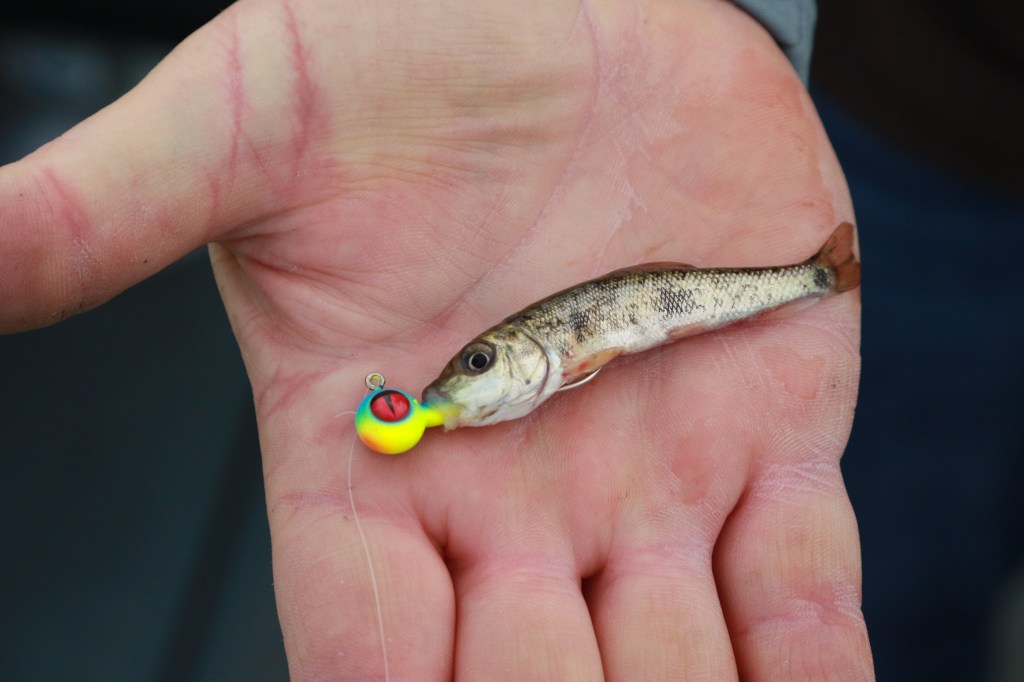
There’s no shortage of walleye jigs, but choose one with a quality hook and a good color selection. Brosdahl likes the Northland Tungsten Short Shank Jig.
“The 1/16-, 1/8-, and 1/4-ounce sizes are my bread and butter,” Brosdahl said. “I also keep 3/8- and 1/2-ounce sizes in my box for deeper water over 20 feet.”
Colors matter to Brosdahl and, while he packs a wide range of options, he’s partial to a handful of tried and true colors. Green matches a lot of the sunfish and minnows that walleye eat, while white’s a trusted color across the fishing spectrum.
Conditions and fish preference can vary, but in any walleye waters Brosdahl trusts a particular trio of colors: gold (maybe with a touch or brown and orange), blue/white, and black.
Natural Appeal
Jigs with curl tails, paddle tails, or fork tails will interest active walleye, but when the fish need a little persuasion, Brosdahl sweetens the deal.
“When they’re really biting, I just use a jig and plastic, but if they’re not reacting, then I’ll use ‘meat,’” he said. “A nightcrawler is the No. 1 bait, hands down, all across the walleye belt, but you don’t always need an entire crawler.”
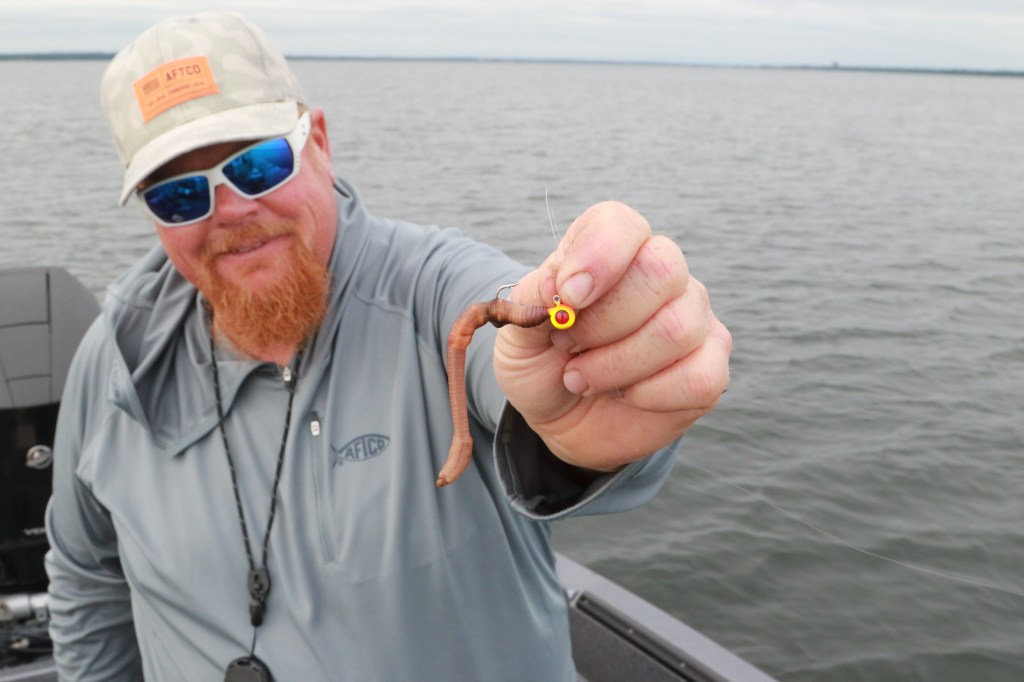
Brosdahl doesn’t mind threading his jig hook into a midsize crawler, but for the larger ones, he pinches or cuts off about a third of the worm. For one thing, this releases more scent for walleyes to follow. Also, shortening the deal lessens the hassle of losing his bait to nibbling yellow perch.
For small nightcrawlers, Brosdahl folds the worm in half and hooks it through the curve. This leaves two wiggling ends that resemble crayfish pinchers.
Other options include leeches and sucker minnows. The latter make a good choice for live baiting, but Brosdahl said 90 percent of the time, he’s fishing a dead bait rig for its long-cast durability.
For his standard jig and minnow setup, Brosdahl inserts the hook point into the bait’s mouth, brings it out through the gills, then turns the point back into the body.
“Double hooking the minnow creates a more secure (rig) so you can cast father without the minnow coming off,” Brosdahl said. “This also makes it mostly weedless, but during a lighter bite, I’ll push the hook point through the minnow’s back for better hookups.”
Tip: Worms tend to dig low into their container’s fill material. Not a big deal, but having to shake them to the top every time you need a bait burns valuable fishing time.
Brosdahl overcomes this common chore by placing a lightly wadded paper towel between the lid and the top of the fill material. This tricks the nightcrawlers into thinking they’re covered, so they generally remain atop the fill material where the oxygen is better.
Open the lid, remove the paper towel, grab a worm and replace the false ceiling.
Technique
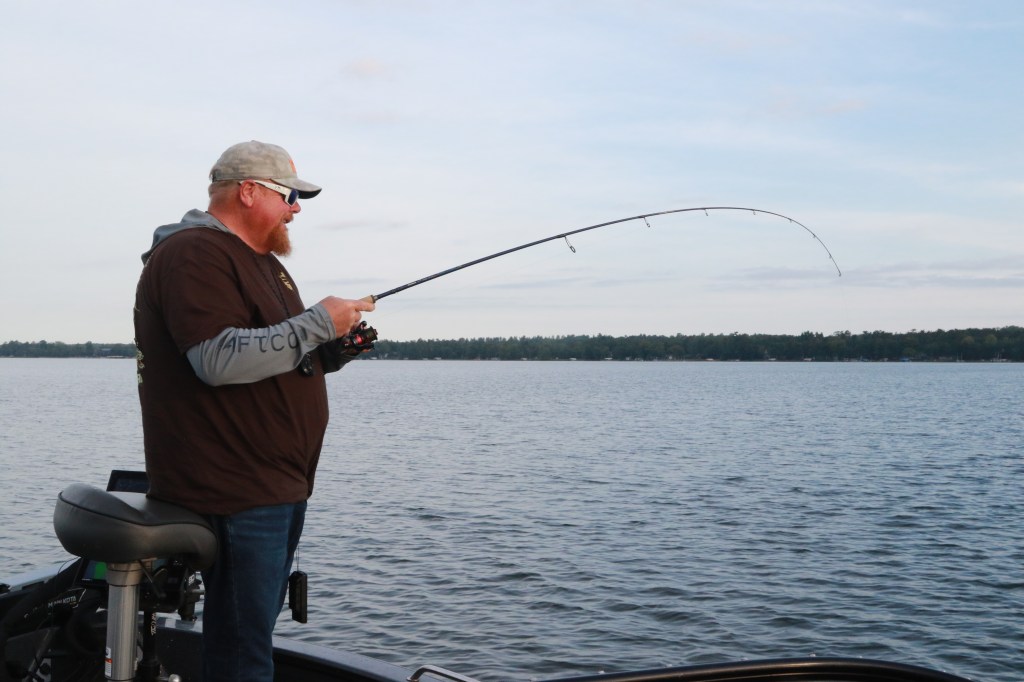
Brosdahl’s jigging technique starts with a full bottom drop, then two cranks to bring the bait up a few feet. He’ll work his jig with a staggered cadence of single hops followed by patient pauses, with the occasional double hop to mimic a startled baitfish.
Hook sets don’t require the eye-crossing vigor common to flipping weeds for largemouth bass. Rather, Brosdahl advises a measured sweeping hook set. On the bite, reel tight and simply pull the rod to one side.
This typically sinks the jig hook, but don’t let up. Keep reeling to maintain consistent pressure.
“When you’re reeling in your walleye, keep the fish’s head under the surface until you (or your fishing partner) has the net ready,” Brosdahl said. “This is the point where anglers lose a lot of walleye, so make sure you’re ready to slip the net behind them.”
Our day’s schedule prohibited us from keeping dinner fish and I’ll regret that for many years. Those with less time constraint will enjoy a fresh fish dinner with one of the tastiest of freshwater fish.
You can find Capt. Brian at www.brosguideservice.com