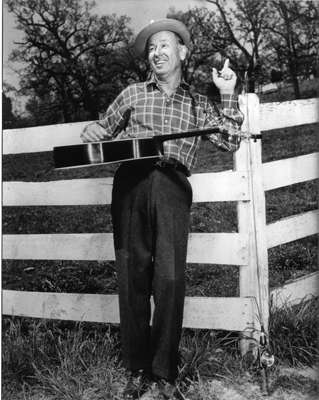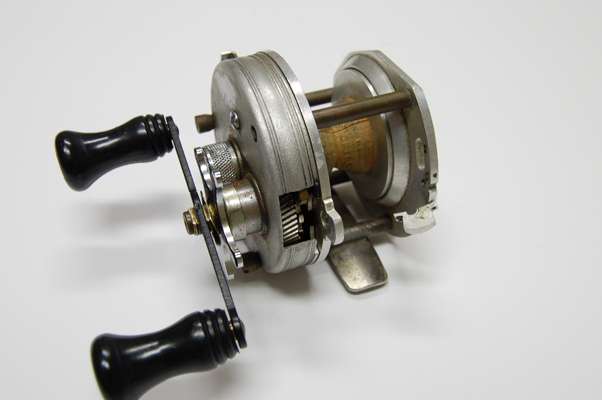
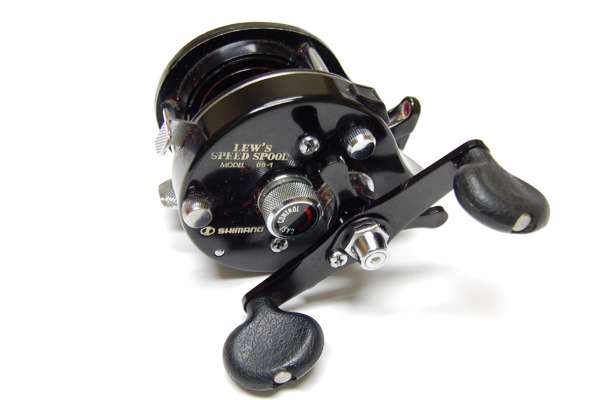
Lewâs founder Lew Childre set the fishing industry on its ear when he introduced the first Speed Spool in 1973. The reel, which featured many innovations for a baitcaster, was manufactured in its earliest years by Shimano, a Japanese manufacturer of bicycle parts. Childreâs original interest in Japan-grown bamboo for his âbreamâ poles took him to that country where he ultimately teamed with Fuji, and then Shimano, for some of his earliest rods and reels. Lewâs introduced those two now well-known names into the U.S. sport fishing market.

Childre and his Lewâs Speed Spool are credited with the introduction of the low-profile baitcast reel shape, a smooth âpalmingâ side cover with no knobs for user comfort, and the disengaging levelwind. When Shimano entered the fishing reel market in the early 1980s, Lewâs changed manufacturers to Ryobi. The Lewâs V-spool offered a self-regulating cast control that âautomaticallyâ adjusted to the cast as the line became more centered on the tapering spool during payout.
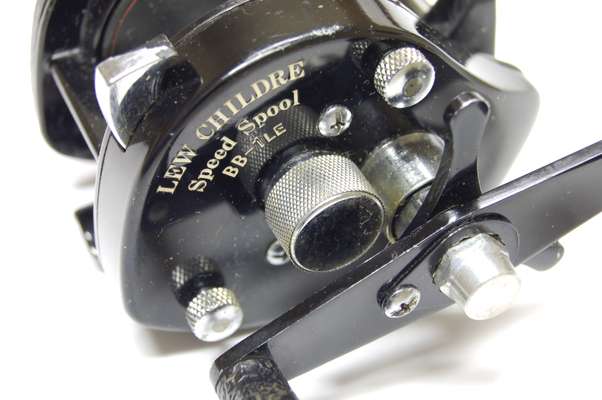
Childre did not have the opportunity to see his Lewâs products skyrocket in popularity during the infectious bass craze of the late 1970s and into the 1980s; he was killed in 1977 when a plane he was piloting crashed. Fortunately for anglers, the brand lived on through his family members and other business relationships, with new products being introduced on a regular basis. As then Field & Stream magazine fishing editor Ken Schultz wrote in a January 1983 article, âNew Tackle â83,â âChildre now has the BB-1LE Speed Spool bait-casting reel for beginning fishermen plus two heavy-duty Speed Spool bait-casters.â The reference implied that even beginners could now use this kind of reel; not a common thought just a few years earlier with the old-style baitcasters.

Lewâs Speed Spools were a popular item in fishing tackle displays across the country, looking sharp and stylish in their black boxes with red and yellow. Many retailers kept a âtestâ model on the counter top, just so anglers could see how smooth the reels felt while cranking. They also liked to point out the comfort of the flat âpaddleâ handles, something that differed from the round knobs common of the time.
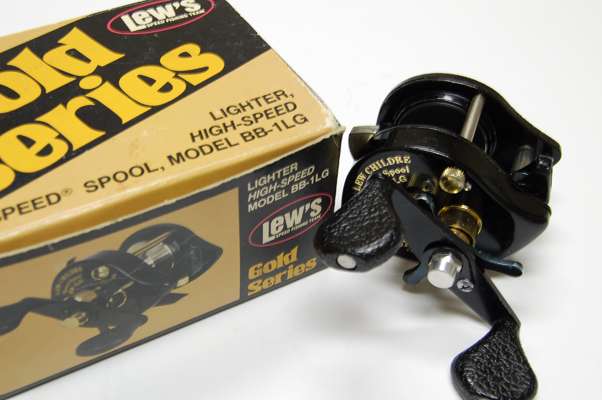
âThereâs gold in them thar reels.â Not literally, of course, but Lewâs Gold Series brought a new level of styling and quality to the traditional black and silver Speed Spools. The gold-colored hardware and graphics symbolized the different âLGâ model, representing a âlighter and high-speedâ version. Itâs interesting to note that âhigh speedâ during this period was usually a retrieve in the 5.1:1 gear ratio range.

The Lewâs Mag Spool BB-1MB incorporated the magnetic cast control technology, differing from the centrifugal cast control found in Speed Spools. It also brought a new and overall smaller shape to the Lewâs family, responding to competitorsâ models for âlight lineâ fishing. The reel also featured the V-spool.

The Lewâs Speed Spool BB-1NG earned a solid reputation among serious anglers as being âtheâ baitcast reel. To this day, the BB-1NG is still used by many longtime bass fishermen as the standard by which all baitcast reels are judged. The reelâs reputation for long-distance casting of big crankbaits was legendary, and it also had an ideal power gear ratio (4.3:1) for getting those big-lipped divers back to the boat time and time again without wearing out the angler.

The âHâ stands for high speed, but the reelâs 5.3:1 gear ratio falls more into line with a âmediumâ retrieve according to todayâs gear ratio references. The Lewâs BB-1NG and BB-1NGH reels were considered genuine workhorses of their era, and many remain in use today.

The Lewâs BB-XLM was one of the earliest ultra-light baitcast reels on the market. The tiny reel was part of the Mag Spool family, offering the convenience of an external dial cast control. Because of its small size and limited line capacity, it worked best with 6-10 lb. test line.

Lewâs Speed Spin models earned the brand a prominent place in the spinning reel category that it maintains today. The Browning label on this Speed Spin references the period of time when the Lewâs brand operated under a license to the well-known Browning family of products. For a while, the co-branded Lewâs rods and reels existed first under the Browning corporate umbrella, and then later under Zebco brands.

Lew Childreâs thirst to make fishing products better began with bamboo poles. He searched worldwide for the best and straightest bamboo available, and his quest led him into many other rod discoveries. New materials and technology resulted in an expanded product line, including telescopic fiberglass poles, ultimately giving birth to the iconic Lewâs Bream Buster series.

Lew Childre and his wife âBebeâ encountered many trials and tribulations while trying to make a living and raising sons Craig and Casey along the Gulf coast of Alabama. First it was selling shrimp as bait to fishermen, and that evolved into a small tackle shop. Childre, an avid outdoorsman himself, always kept an eye open for something that bettered his pursuits and presented an entrepreneurial opportunity. Frog gigging was one of those things, so was developing a better gig.

Look familiar? Childre was an expert at prototyping, being resourceful in both materials and creativity. These early predecessors to the Lewâs Speed Stick spinning and casting handles proved invaluable in showing the manufacturing exactly what he had in mind. His hand-carved pistol grips made it onto several concept rods. Speed Sticks were introduced into the market in 1970, anchored by the popular hand-fitting pistol grip casting rods.

Lew and his close ally Shag Shahid spent hours upon hours of carving and fine-tuning the perfect grip to fit an anglerâs hand. This version, carved by Shahid (thatâs his name carved into it), went on to become the pistol grip that was manufactured by Fuji and became the signature look of Lewâs Speed Sticks casting rods. The Speed Sticks also introduced the Fuji ceramic guides with a cushion insert to American anglers. Speed Sticks went on to become the number one selling rod of its time among avid bass anglers.

Clip it! Tinkerer Lew Childre was always trying to build a better mousetrap. He felt there was a need for a multi-tasking angler tool that could cut anything from braided fishing lines, to snipping off a hook or trimming excess plastic from a hardbait. Notice the spring mechanism that keeps the cutters open for easy one-hand use, a popular concept among todayâs fishing pliers.

This old wooden presentation box proudly houses the first-off-tooling samples of the Lewâs pistol grip casting handle parts, manufactured by Fuji, that helped revolutionize bass fishing during the sportâs rapid rise to popularity in the 1970s and 80s. Lewâs Speed Sticks, featuring this pistol grip, became the top selling bass rods of the time.