For office folks, it may be another cup of coffee, a healthy fruit smoothie or a brisk walk around the parking lot. For bass anglers, the midday slump requires more strategic thought.
From weather patterns to sun angles to fishing pressure, the reasons vary, but the reality remains: from about 11 a.m. to 1 p.m., anglers often find the bites few and far between.
With 365 different days in a year and at least that many U.S. bass fisheries, addressing every possible scenario would take us longer than most care to read. Rather, let’s look at a handful of strategies with broad applicability.
Understand the timing
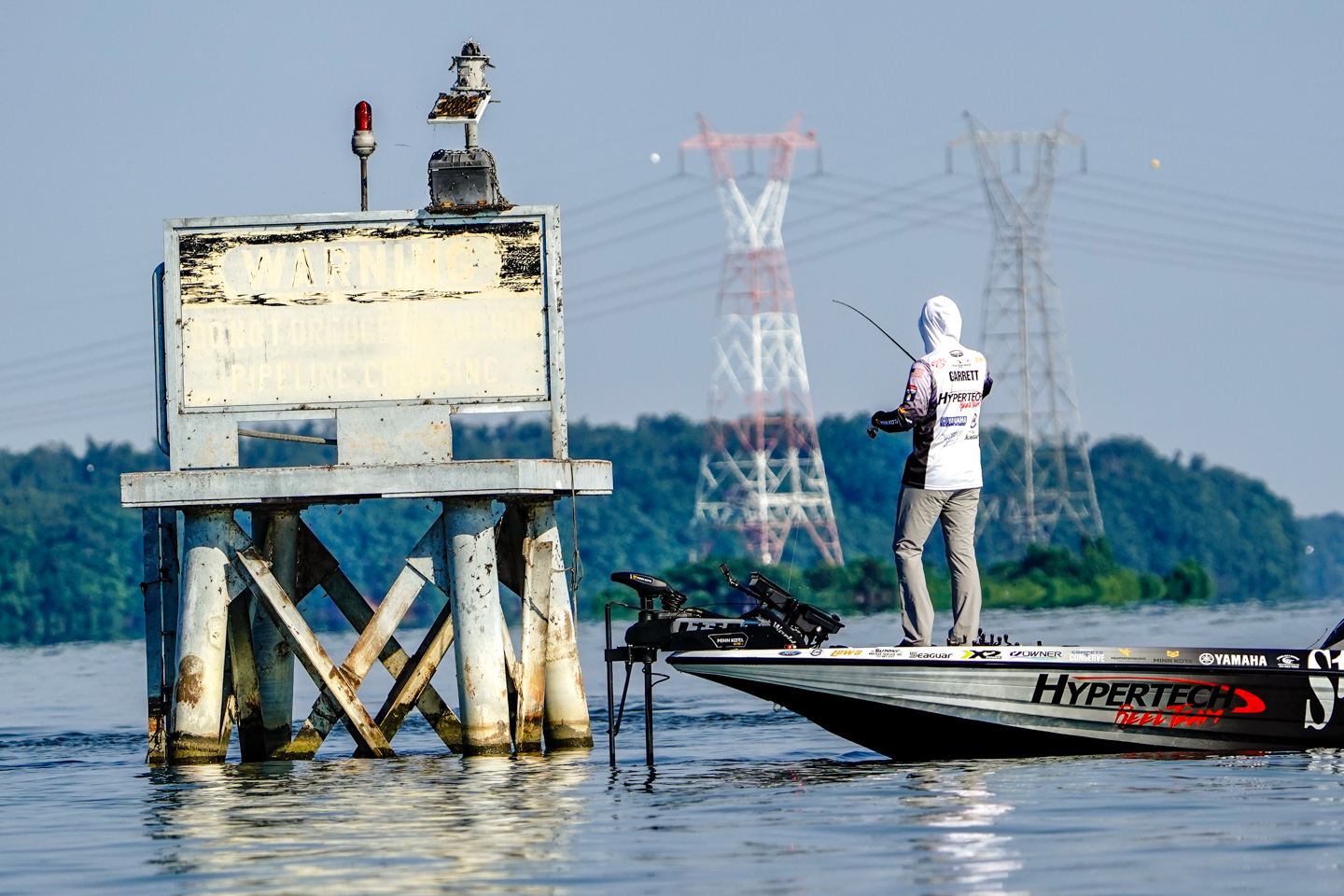
Second-year Elite John Garrett, who punctuated his rookie season with a blue trophy at the Harris Chain, finds midday slumps most predictable in the summer months.
“First thing in the morning there’s always fish feeding; it’s a little cooler, they were feeding at night and you’ll catch a few early,” Garrett said. “So many times in the summer, they’ll bite again in the afternoon. Maybe (the dam operators) are pulling water, the shade positioning gets right or they just hug cover better.
“All summer into the early fall months is usually pretty tough fishing.”
Spring’s more dynamic nature lessens the midday slump premise, but downturns still occur. As Garrett notes, it depends on the day.
“If a day starts out cold, and it gets warmer, sometimes that slump is right off the bat, and they tend to bite better as the day’s progressing,” he said. “Later spring, when you’re around the postspawn/shad spawn period, they bite well really early and then they’re really weird after the shad spawn. It takes them a while to set back up on their traditional spots.”
Also, while spring days (prior to the shad spawn) may offer that early morning low-light feeding bite, the afternoon warmup typically spurs the spawners. Even when you know they’re coming, that scenario can leave several lean midday hours.
High percentage areas
When a midday slump turns most of the usual spots into ghost towns, find spots that give bass a reason to be there. Where can they find food, moving water, higher oxygen content? In lakes and slow moving rivers, drain pipes and any small run-ins offer your best options.
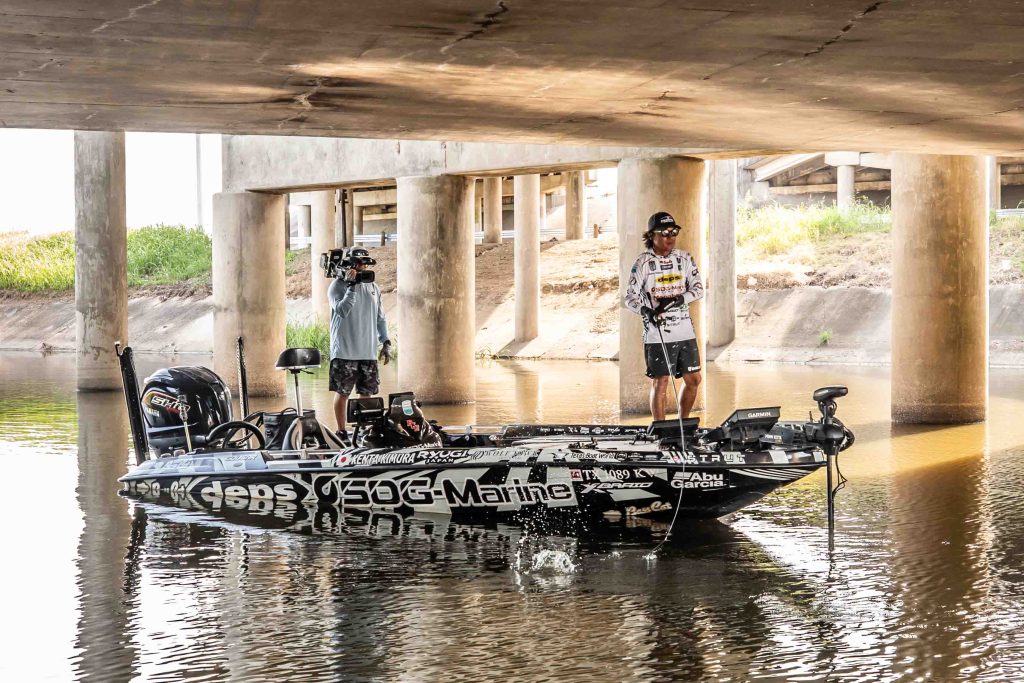
During the 2023 Elite event at the Sabine River, Kenta Kimura found a small stream of running water near bridge pilings that attracted a pile of fish. This turned out to be a short-lived opportunity, but while others struggled for bites on a generally tough fishery, he squeezed that deal for all it was worth.
Similarly, the Onalaska Spillway, which delivers its namesake lake’s overflow into the Black River (a Mississippi River tributary), offers a concentrated inflow area of high energy just north of LaCrosse, Wis. Accessible by land and water, the spot usually sees several Elites seeking a midday remedy in those current seams.
Drew Cook confirmed: “I caught a limit there every day at (the 2022 Elite).”
Make contact
Anytime Greg Hackney’s facing a midday slump, he’s a big fan of knocking on doors. Nothing subtle here; he wants to pester them into biting.
“That’s when I flip, because I can get a reaction bite when there’s nothing going on,” he said. “It’s either that, or if I had some shallow wood to crank with a squarebill, I’ll bang that lure into it, because you have to make that fish bite.
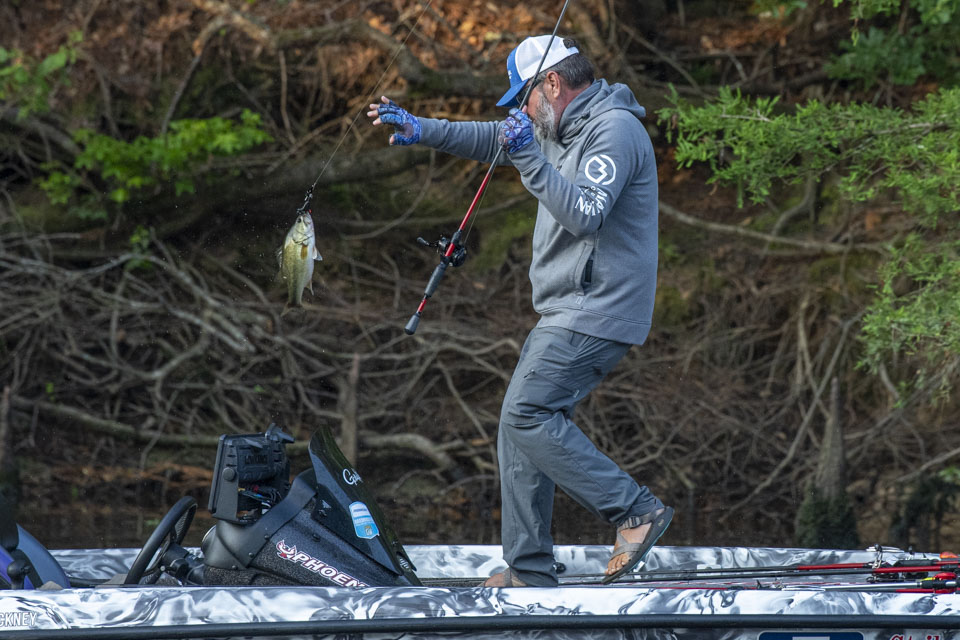
“If I can find a mat, I’ll make as many flips as I can. Or, if I pull up to a laydown, I’ll throw at it 50 times until I make one of them kill it. When you get bit, you’ll (usually) catch him because that fish bit out of aggravation, not because it was hungry.”
Garrett’s also a squarebill fan, especially on riprap. In his view, there’s almost always a population of fish living on those manmade rock banks, so he simply matches his depth to where weather and seasonality will likely position the fish.
Make it easy on ‘em
Regardless of how junk-fishing crowded his front deck may be, Garret’s most comfortable confronting the midday slump with a Texas-rigged Strike King Zeus Worm.
“I’ll flip it around laydowns, the shade of a boat dock post, or a stump,” Garrett said. “A worm is a bite getter.”
Carolina rigs also fit the bill here, as that loud rumbling weigh trumpets the arrival of a vulnerable bait a step or two behind. Often turning to this tool, Bryan Schmitt maximizes his C-rig bait’s appeal by adding a Floatzilla attachment, which raises the plastic higher in the water column.
Finesse tactics obviously fit here, as well, and when anglers marry the small, slow stuff with steely patience, big things can happen. Case in point: Takumi Ito, who earned a third place in his first visit to the notoriously stingy Sabine River.
When the minimal tide slacked and hot sun baked the waters, Ito channeled his experience on Japan’s heavily pressured clear water fisheries, found several key fish — including a 3 and a 3-14 in the final round — by targeting the shade of a broken bridged with a Nories Sankaku-T-San (a T-shaped soft plastic bait).
While his competitors tried to trigger reaction bites with various moving baits, he went straight-up car salesman and bugged those fish until they couldn’t help but bite.
Open to change
Likening a midday slump to the downturns common to postfrontal days, 2013 Bassmaster Classic winner Cliff Pace said the ability — and willingness — to mentally shift gears defines the difference maker.
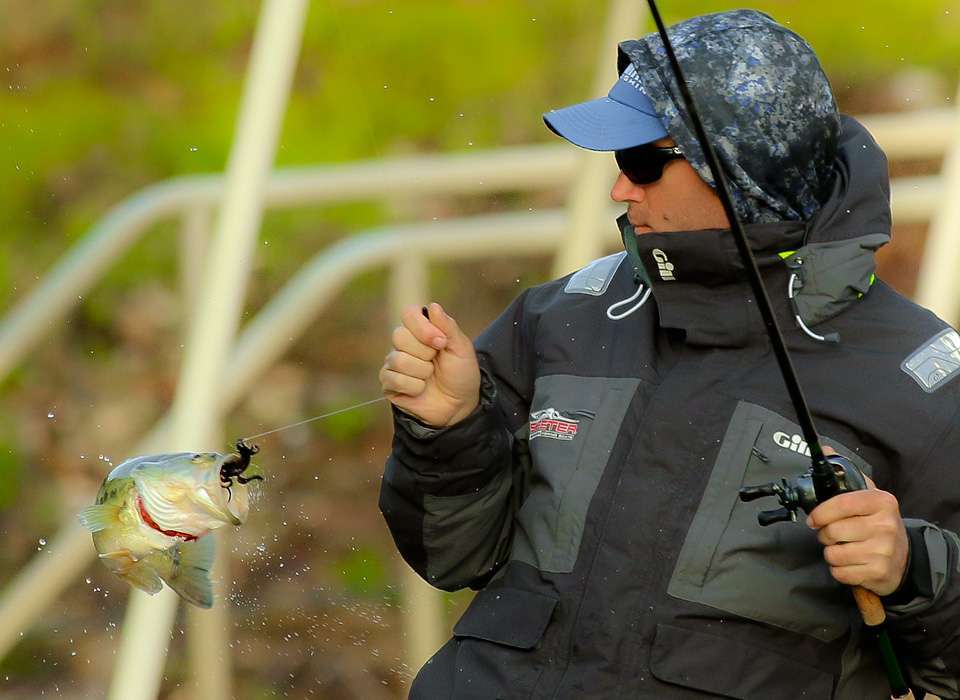
“A lot of times, we want to run out there, fish the first two hours and catch them on something we like doing, but then we have to hit the reset button,” Pace said. “As fishermen, we often want to hold on to something after it stops working, but we have to know when to let go.”
Leaning heavily on a finesse lineup of drop shots, Ned rigs, wacky rigs and shaky heads during those midday lulls, Pace cautions against assuming a total slowdown. A firm believer in power fishing’s day-long potential, he stresses the need to wisely apply this technique.
“You can force feed them at times, but if you’re going to force feed them, you’ve got to be around a bunch of them,” Pace said. “If you’re around 1,000, it’s a lot easier than if you’re around 10, so if you’re going to power fish during a midday slump, you want to be on some of your best (areas).”
Calling squarebills and jerkbaits his top choices, Pace makes sure his hard baits carry BKK Spear 21 treble hooks. Midday slumps typically find fish nipping at baits, so he wants small wire diameter round bend hooks with extremely sharp points, which snare whatever bites.
Complacency kills: A red hot bite with nearly nonstop action gets the blood pumping, fuels the motivation and drives us onward. Reduce the frequency of that line-tugging thrill and enthusiasm diminishes.
Understandable, but Hackney said you gotta fight the downward pull and pick up the pace.
“You have to cover a lot of water when you’re trying to make them bite,” he said. “I’ll have to run by a lot of fish to get a bite, so I speed up. It’s a lot of work, but the reward can be pretty good.”
Garrett agrees and points out the long term benefit of looking beyond the norm.
“During midday slumps, I go off my game plan and I fish whatever I come across, a bridge, riprap, whatever,” Garrett said. “That helps my mental focus because I’m getting through this midday slump and saving my good stuff for the afternoon.
“That’s a good way to pick up random bites, and you might figure out something different that might help you later on.”